Spiritual Awakening: Yahweh, Samsara, and the Matrix
Explore spiritual awakening through an esoteric view of Yahweh, samsara, and the Matrix—and discover the divine spark within. Start your journey.
by Matrix Unveiled · · 6 min read
Who Are the “Middle 30%” on the Wheel of Samsara?
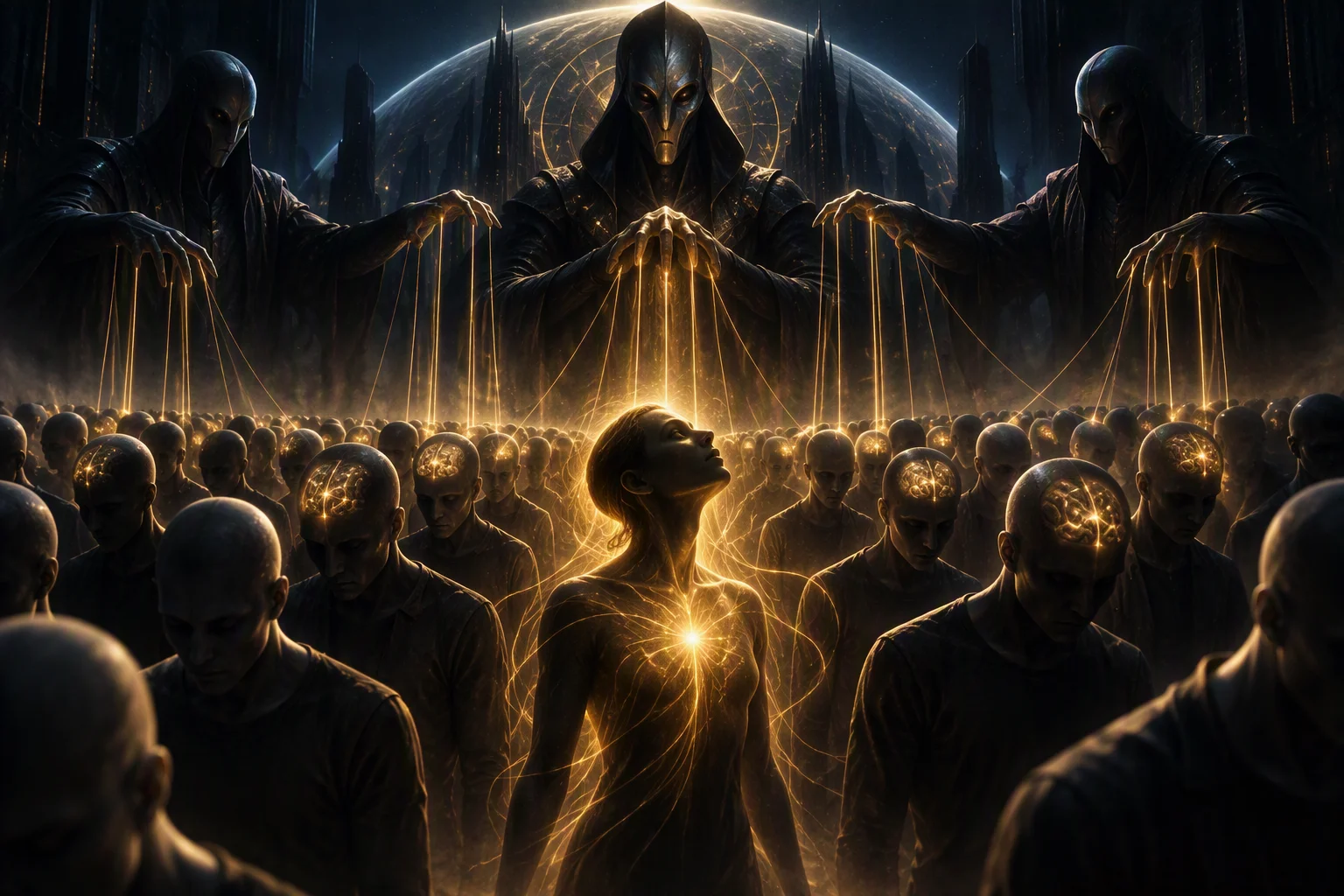
In the esoteric worldview explored in this article, the “middle 30%” are beings who carry a divine spark but remain bound by the conditioning of the Wheel of Samsara: the cycle of reincarnation and astral experiences.
This interpretation draws on a spiritual classification that describes 60% of embodied humanity as “soulless biological replicas.” The middle group is said to help maintain the balance of earthly experience.
These percentages and categories belong to the cosmology discussed here. They are not a scientific or verifiable classification of people. Likewise, the interpretations of Yahweh and the Buddha below reflect this particular esoteric perspective, not a consensus among religious traditions.
Unlike the so-called replicas, members of this middle group are understood to possess a genuine divine spark. They are connected to the spiritual realm, have subtle bodies that bridge higher planes of existence, undergo reincarnation, and inhabit astral planes after physical death.
Their central struggle is inner confinement: the divine spark lies dormant, sealed off by conditioning, contracts, dogma, and fear.
┌────────────────────────────────────────────────────────────────────────┐
│                  ANATOMY OF THE PLANET'S MIDDLE 30%                    │
├────────────────────────────────────────────────────────────────────────┤
│ • Divine Spark: Connected to Spirit and the subtle bodies             │
│ • Current State: Spark enclosed by dogma, contracts, and fear          │
│ • Spiritual Cycle: Subject to samsara and reincarnation                │
│ • After Death: Move through astral planes, mental creations,           │
│   and shadow realms                                                   │
│ • Core Dilemma: May become "Wheat" (the Chosen) or "Weeds"               │
└────────────────────────────────────────────────────────────────────────┘
Members of this group move through lifetimes shaped by mental programming and influenced by the automatic behavior attributed to supposedly soulless beings. Although they feel an inner longing to awaken, they remain captivated by—and caught within—Yahweh’s system of spiritual instruction.
The challenge, then, is not to acquire a spark they lack, but to awaken what already exists within them.
Yahweh and the Demiurge: A System of Spiritual Confinement
To understand how this middle group becomes trapped within this cosmology, we need to examine Yahweh, who is associated here with the Demiurge.
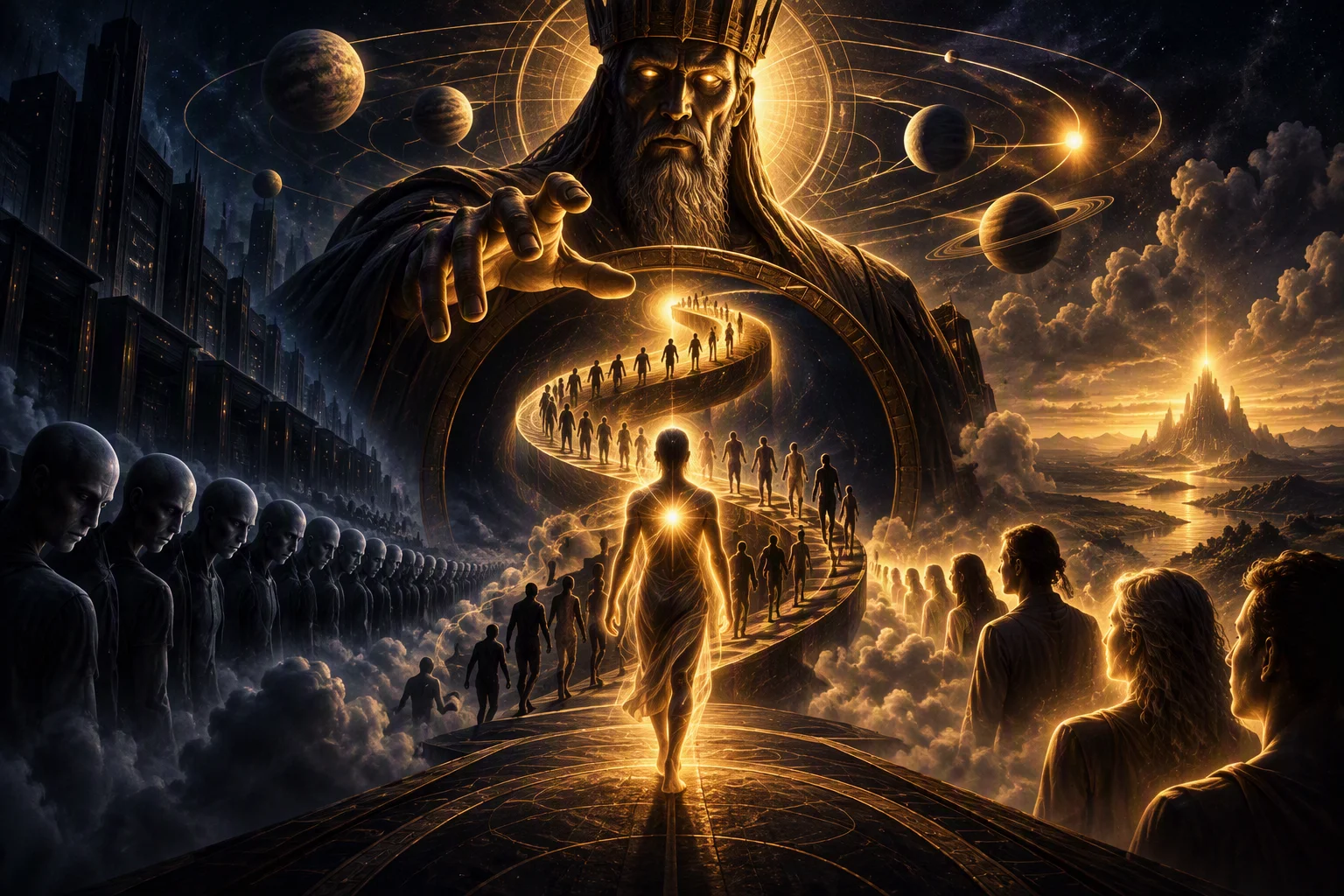
In this interpretation, Yahweh is neither a demon nor an inherently evil entity. He serves as the head teacher and overseer of the solar system’s classroom, operating through the fourth day of creation.
Yahweh as a Limited, Regional Entity
Yahweh is described as a local, regional dimensional being, confined to the parallel dimensions of our solar system.
His reach is not presented as unrestricted or fully multidimensional. He oversees a particular classroom, not the whole of existence.
The Demiurge’s Discipline-Based Teaching
Yahweh’s teaching method relies on strict rules, demanding tests, and military-style discipline.
When someone in the middle group fails to follow the system’s rules, they face consequences intended to teach through discipline. Learning therefore remains tied to obedience, accountability, and repeated experiences.
Yahweh’s “Virus” and the Search for Feeling
In this interpretation, Yahweh is a dimensional structure without higher subtle bodies and therefore lacks the inherent ability to experience genuine feelings and emotions.
Yahweh’s so-called “virus” represents an uneasiness instilled in the middle group: persistent doubts and tests concerning the experience of feeling.
This emotional hothouse is said to serve an attempt to understand the nature of multidimensional beings. “Virus” is used here as an esoteric metaphor, not as a reference to a biological agent.
The Wheel of Samsara: Choosing Between Wheat and Weeds
The Wheel of Samsara refers to the cycle of rebirth in Indian religious traditions. In this article’s cosmology, it is interpreted as an ongoing circuit of reincarnation and astral experiences that supports the system’s teaching methods.
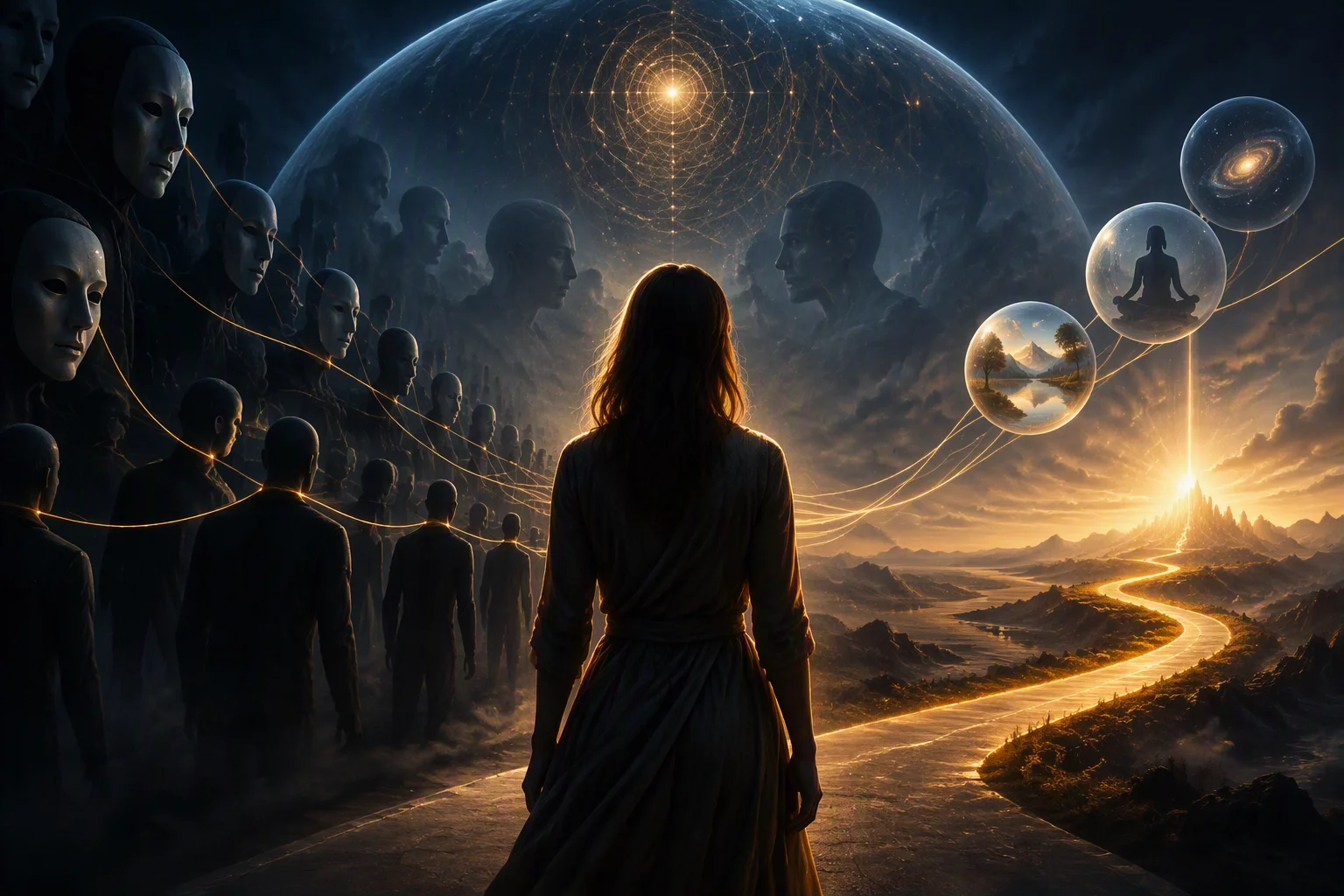
Within this wheel, the middle 30% face a symbolic separation between wheat and weeds: a commitment to inner truth or a return to the same conditioned patterns.
The Weeds: Spirituality Driven by Self-Interest
The greatest risk for this middle group is pursuing spirituality with ulterior motives.
This happens when participation in temples, spiritual orders, or rituals is driven primarily by:
- Material interests and the desire for an advantage.
- Vanity and the need for spiritual recognition.
- Fear, greed, or bargaining with external forces.
- The desire to avoid suffering without changing one’s character.
In this state, spending time in spiritual settings does not necessarily mean awakening. A person may accumulate practices and spiritual language while remaining unable to apply those teachings to everyday life.
The article calls this disconnect “functional spiritual illiteracy”: knowing the language of spirituality without undergoing the inner transformation it calls for.
The Wheat: A Commitment to the Divine Spark
A member of the middle group becomes wheat, or one of the “chosen,” by making an authentic commitment to inner truth.
In this interpretation, that is not simply a status granted by an outside authority. It means freeing the divine spark from conditioning, letting go of spiritual bargaining, and taking responsibility for one’s own awakening.
The essential difference is intention: seeking truth for what it is, not merely for the rewards it promises.
Awakening the Divine Spark: An Esoteric View of the Buddha
This approach presents the awakening of Siddhartha Gautama, the Buddha, as an example of breaking free from external spiritual dependence.
The proposed interpretation can be summarized as follows—as an esoteric reading, not a historical quotation from the Buddha:
The Buddha is understood here to have reached enlightenment not by worshiping gods or external powers, but by ending that dependence and turning toward inner awakening—described in this framework as honoring the divine spark.
The key is a change in direction: no longer looking outside yourself for something that requires an inward commitment.
[Seeking External Gods and Teachers] ──► (Trading Illusions / Dependence)
                                               │
                                               ▼
[Honoring the Divine Spark Within] ──► (Sacred Self-Commitment / Freedom)
Four Steps to Break Free from Samsara
1. Make a Sacred Commitment to Yourself
The first step is to stop handing responsibility for your awakening to gurus or external deities.
Making this sacred commitment means taking responsibility for yourself and your own divine spark. Transformation is no longer a task delegated to another force; it becomes a guiding principle for how you live.
2. Recognize That Suffering Is Not a Requirement
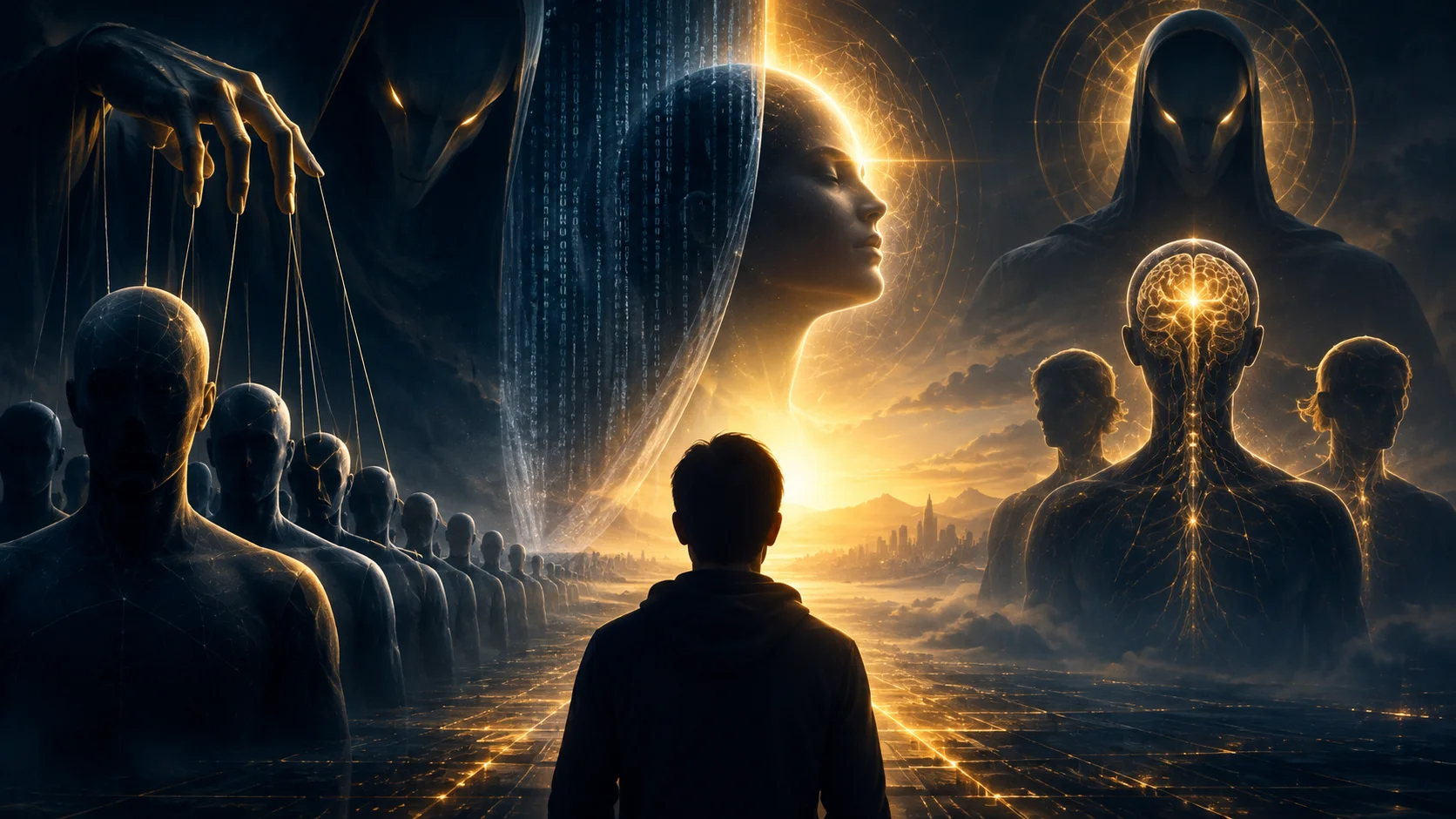
Pain and scarcity exist within the Matrix, but from this perspective, they are not mandatory conditions for spiritual growth.
This does not mean denying the pain you have experienced. It means questioning the belief that suffering is, in itself, necessary for awakening.
3. Distinguish Who You Are from What You Experience
You inhabit a physical body and move through temporary conditioning, but according to this spiritual view, you are not merely that body or its limitations.
This shift in perspective helps distinguish your deeper identity from passing circumstances. Conditioning becomes something you can observe and transform, rather than a permanent definition of who you are.
4. Break Automatic Habits
The final step is to recognize and replace habits that feed anger, fear, and anxiety.
In the article’s esoteric language, this shift is called “canceling quantum entanglement with the psychosphere”: loosening automatic ties to collective mental and emotional patterns. The phrase is used in a spiritual sense, not as a mechanism established by quantum physics.
Within this framework, freedom from the Wheel of Samsara begins when a person stops unconsciously repeating these patterns. Awakening the divine spark means turning an inner longing into responsibility, discernment, and daily practice.